UK Wood Fairs and Tree Festivals: A Seasonal Guide for Oak Lovers
There is a rhythm to the British wood fair year, and it suits oak lovers rather well. Spring is for planting, pruning and the first outing with a flask. Summer belongs to the big countryside shows, with their arenas, craft tents and drifting woodsmoke. Autumn brings the working wood fairs and the acorns. Winter narrows to coppicing, hedgelaying, cold workshops and tree planting.
Dates shift and venues move, so treat what follows as a seasonal map rather than a fixture list. Check the organiser's website in the week before you travel.
Spring: planting, tool stalls and the first fairs
Bare-root planting runs from roughly November to March, while trees are dormant. By April the sap is rising and the window has closed, so spring is either your last chance to plant or your cue to order for autumn.
Spring fairs are quieter, which helps. Tool sellers have time to talk, and the woodworkers at a pole lathe will happily explain how a drawknife behaves differently in oak than in ash. Look for the Royal Welsh Smallholder and Garden Festival at Builth Wells in May, county shows such as Devon's, and Woodfest Wales, usually in late spring or early summer.
If you are buying young trees, ask where the seed came from. A good British nursery will know whether its oak is homegrown and roughly where the acorns were gathered.
Summer: the big shows and the long days
July and August belong to the large countryside shows. The Royal Welsh Show at Llanelwedd and the Great Yorkshire Show at Harrogate both run in July, and The Game Fair moves venue each year, typically in late July or early August. The woodland and craft areas are often worth the ticket on their own.
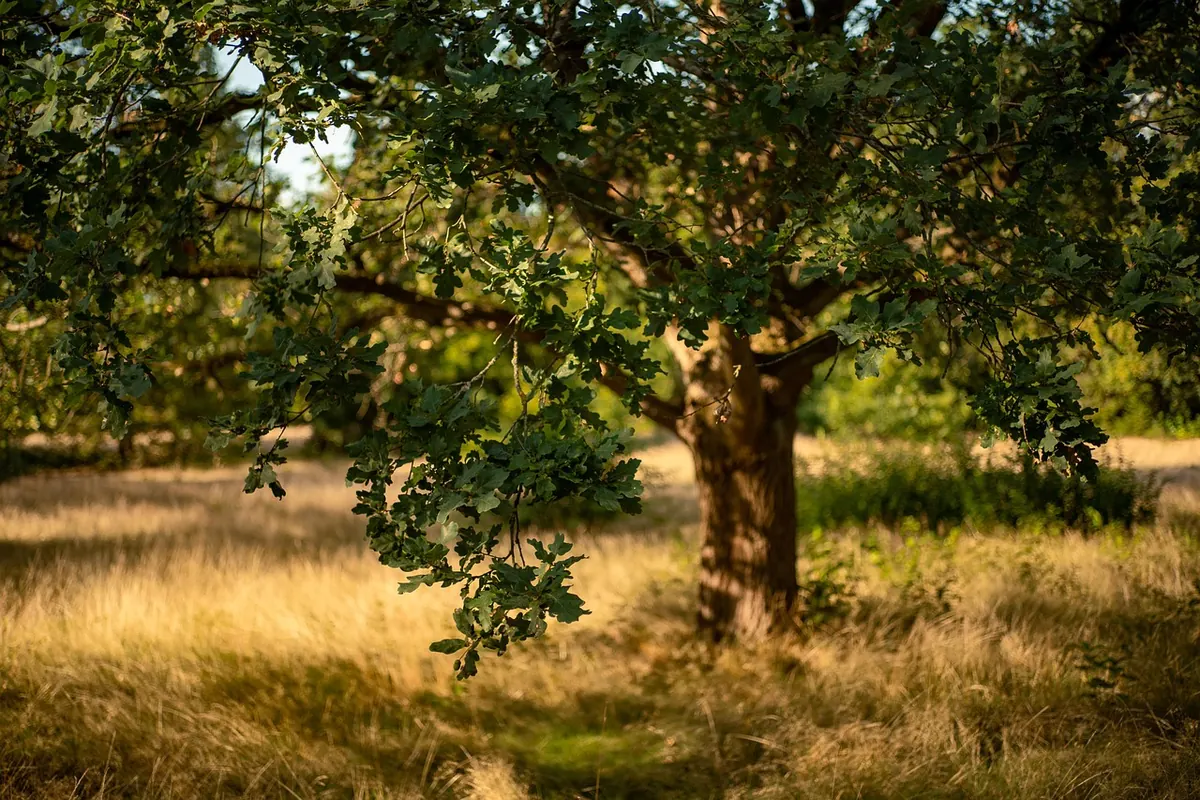
Expect horse logging, chainsaw carving, oak-framed building displays, hurdle makers and good tool stalls, plus tree identification walks. A quick way to tell pedunculate oak from sessile oak: check whether the acorns sit on stalks or cling straight to the twig.
Westonbirt Arboretum's Treefest, usually over the August bank holiday, mixes tree tours with woodcraft stalls. Go early and take water; demonstrations often run to a timetable.
Autumn: the working wood fair season
This is the heart of the year for oak lovers. Small wood fairs appear on farms, in country parks and at sawmills, selling locally milled boards alongside charcoal burning, pole lathe turning and coppice crafts. The APF Exhibition, the forestry and arboriculture show, runs in alternate Septembers and is where to watch serious machinery at work.
Autumn is also hedgelaying championship season and the time of The Tree Council's Seed Gathering Season, usually from late September into October. Collecting acorns is a fine excuse for a walk.
Collecting acorns: a few ground rules
- Ask permission first. Woodland, farms and roadside verges all have owners.
- Choose healthy native oaks. Pedunculate oak carries acorns on stalks; sessile oak does not.
- Take a handful from several trees rather than stripping one. Squirrels, jays and mice rely on the crop.
- Discard acorns that float. They are usually hollow or weevil-damaged.
- Sow at once in deep pots and protect them from mice; oak sends down a long taproot quickly.
Oak gives two harvests a year if you look for them: the timber that comes off the sawmill, and the seed that falls in October.
Winter: coppicing, courses and planting
National Tree Week falls at the end of November or the start of December, with planting days and guided walks, and it opens the planting season proper. If you have ordered bare-root oaks, this is when they arrive and when the ground is most forgiving.
Traditional woodland work happens now. Coppicing is a winter job, done while the sap is down and the ground firm, and hedgelayers cut and lay in the coldest months. Rural museums and craft workshops run green woodworking courses through the winter: spoon carving, stool making, basic joinery. They fill quickly, so book early.
Fairs themselves thin out. Use the quiet weeks to sharpen tools and decide which events are worth the travel.
What you will find at a wood fair
Most fairs share a core of stalls and demonstrations:
- Sawmills and timber merchants selling oak boards, waney-edge slabs and beams.
- Green woodworkers at pole lathes and shave horses, turning bowls and making chairs.
- Chainsaw carvers, who draw a crowd all day.
- Charcoal burners, coppice workers and hurdle makers.
- Tool sellers with axes, drawknives, froes and sharpening kit. Bring a blade you are unsure about and ask.
- Tree nurseries selling native saplings, plus talks on tree identification and woodland management.
Buying oak at a fair: a short checklist
A fair is a good place to buy timber because you can handle the board before you commit. A few habits worth keeping:
- Measure your project first and take a tape with you. Boards look smaller in a field than in a workshop.
- Ask where the tree grew and when it was felled. British-grown oak is often available and you can usually trace its history.
- Ask whether the timber is air-dried or kiln-dried, and how long it has been stacked. Air-dried oak is prized for stability and workability but takes years; kiln-dried is quicker and more predictable indoors. For furniture, ask about moisture content.
- Check for shakes, splits and dead knots, and look at how the stack has been stored. Timber left uncovered will show it.
- Sort out transport before you buy. A thick oak slab is heavy, awkward and unforgiving of a small car boot.
- Take cash and be realistic about price. A fair price supports the mill that will sell you the next board.
Planning your season
Pick three things rather than ten: one large show, one local wood fair and one course. Book courses and any camping early, and check the organiser's site the week before for cancellations and parking arrangements. Take boots, waterproofs, cash, a tape measure and a bag for catalogues.
One last thing. If you plan to fell, prune or move a mature oak, check first whether it is protected by a Tree Preservation Order or stands in a conservation area, and speak to your local authority before starting. For anything structural or safety-related, use a qualified arboriculturist.
Photo: spazgenev / Pixabay
You Might Also Like
Veteran oaks carry centuries of local history that is rarely written down. Here is how to photograph, measure and record one so your findings last.
A practical guide to starting a village oak club, from finding a founding group and planning walks, talks and seed swaps to running small conservation projects.